What if Low Energy Nuclear Reaction (LENR) really works?

A careful Brain Storm about the near future. What we can expect if the abstrous becomes reality.

By Christopher Calder  (from OpEdNews.com)

What is happening right now with LENR technology?

Engineer Andrea Rossi claims to be in talks with a well known giant American retail chain store to sell his 10 kilowatt home heating LENR reactors, which he calls E-Cats, short for Energy Catalyzer.  The retail price is expected to be about $1,500 each, with mass production beginning in the fall of 2012.  Can Rossi get government approval to sell unconventional nuclear reactors for home use?  Rossi states his heaters will output 6 times more energy than fed into them, and they produce no pollution of any kind.  A Greek company called Defkalion Green Technologies states they will start selling their similar Hyperion reactors in a matter of months, and their improved design outputs 25 to 32 times energy input and has longer lasting fuel that is easier to refill. Defkalion claims they have scalable reactor systems up to 5 megawatts (heat) in size, with the largest power plants built into ordinary 20 foot long shipping containers. Both Rossi and Defkalion use low cost nickel dust and ordinary hydrogen gas as nuclear fuel.


NASA speculation on Rossi E-Cat reactor by NASA

NASA’s Dr. Joseph Zawodny also uses nickel powder and hydrogen gas for fueling his low energy laser driven LENR experiments, and Zawodny states that LENR is “A cheap, abundant, clean, scalable, portable source of energy [that] will impact EVERYONE.” He goes on to say that LENR is the “Singular solution to peak oil, climate change, fresh water, and associated geopolitical instabilities.” NASA scientist Dennis Bushnell agrees, and states that LENR can provide NASA with the highly concentrated energy needed to make space travel within our solar system cost effective, as well as bring a permanent end to the energy crisis.

Is this all a hoax, a mirage, or some incredible miscalculation? Rossi’s E-Cat reactors have passed every hands-on test to date by at least a dozen respected scientists from around the world. Rossi claims to have already sold 13 one megawatt E-Cat reactors to an unnamed US military customer, speculated to be DARPA or similar stealth research organization. Zawodny says that LENR reactors can be made small enough to power a mechanical dragonfly, or large enough to electrify an entire city. Perhaps there is an infectious bug going around making scientists all over the world hallucinate positive test results. Critics say that this is all too good to be true, and that there is nothing in our text books that can explain LENR with traditional physics.

The potential military uses of LENR are enormous, which is why the United States intelligence community is especially interested in finding out all it can about advances in LENR technology. Meanwhile, many corporations, scientists, and Internet pundits with financial and/or personal attachments to competing fields of energy production are praying that LENR blows up in our faces, both figuratively and literally. There are often shockingly inaccurate and unfair criticisms of Andrea Rossi and other LENR pioneers posted on the Internet. Despite abundant Internet skepticism and our television media’s strange disinterest, NASA’s Dennis Bushnell states that “The two decades of experiments and the weak interaction theories have removed the existential risk, what is remaining is to ENGINEER for improved performance.”

What will happen to the world if LENR is not a hoax?

Honda, Toyota, and Mitsubishi are already financing LENR research. From the energy density data available, it appears that we may be able to build LENR powered cars that rarely, if ever, need nickel dust refueling. All that would be required is the occasional adding of ordinary tap water to make the needed small amount of hydrogen gas through on-board electrolysis of H2O. LENR fuels are by nature thousands of times more energy dense than fossil fuels used to produce heat through simple combustion.

If LENR is real, then aircraft capable of flying at full speed for months on end without refueling will be possible. Vertical takeoff and landing aircraft could become commonplace, and flying wingless cars as seen in Star Wars movies will be buildable for those brave or reckless souls who don’t worry about the potential for engine failure. LENR jet engines should be relatively quiet, resulting in nearly silent aircraft sailing through the skies.

Zawodny claims that reusable single stage LENR powered space planes will be able to take off from any commercial airport, fly to orbit to deliver satellites, and then land like an ordinary jetliner. This would not only lower the cost of satellite launches, but would allow the cost effective construction of very large space stations. Trips to the moon would become relatively cheap and commonplace, and trips to Mars with active radiation shielding would be possible with a 3 month travel time each way. Space travel could be pursued by private corporations for commercial, industrial reasons, not just by governments. We won’t be able to fly to the stars with LENR, but our solar system would become easily navigable at a price we can afford.


Proposed NASA LENR space plane in orbit by NASA

Proposed NASA LENR space plane details by NASA

LENR researchers predict electrical generation at a cost of between 3 to 5 cents per kilowatt hour for small home units, and 1 to 2 cents per kilowatt hour for large, gigawatt sized power stations. If this is true, then over time all coal, natural gas, and fission nuclear power stations will be dismantlement, and industrial windmills will be torn down and sold as scrap. Ships, trains, cars, everything will be LENR powered, and thus everything we need to survive will fall in price because everything we consume requires energy to produce and transport, most importantly food. LENR would make desalination of water affordable, which could end the global water crisis and allow for increased agricultural production. Oil will always be needed to make chemicals, but if LENR works as hoped in 30 to 50 years fossil fuels will no longer be needed as a significant source of energy.

LENR by it’s inherent nature produces no radiation risk, no toxic waste, and all the materials used to construct LENR reactors are easily recyclable. We have enough nickel fuel to last for millions of years, so our constant worrying about running out of affordable energy will disappear. Just understanding this fact could radically change the global geopolitical situation, with obvious major impact on Middle East politics and military alliances.  LENR may be an impossible dream, but I cannot comprehend how so many respected scientists from around the world could claim so many positive test results if there were not something to it. Scientific frauds cannot pass even one hands-on test by experts, but Rossi’s E-Cats have already passed many well designed tests conducted by PhD scientists who have no financial motivation or bias.

Andrea Rossi has tried to hide the secrets of his E-Cat reactor design, and he has reason to worry because so far the United States Patent Office has refused to give any LENR researcher patent protection. Defkalion Green Technologies came into existence by first working with Rossi and then splitting off to develop their own similar, but not identical design. There are vast amounts of money to be made if LENR really works, but unfortunately for Rossi his E-Cat design already appears to be obsolete. Defkalion’s Hyperions are by any measure superior products if the company’s specification sheets are accurate.

Only time will tell what is true and what is fiction. We should all hope that LENR is real, because without it escalating energy prices will cause further economic collapse, tremendous hardship, and even more global hunger on an unprecedented scale.

Trayvon Martin’s parents reject George Zimmerman’s apology

The fatal shooting of Trayvon Martin by George Zimmerman took place on February 26, 2012, in Sanford, Florida, United States. Trayvon Martin was a 17-year-old African American teenager who was unarmed. George Zimmerman, a 28-year-old multi-racial Hispanic American, was the designated neighborhood watch coordinator for The Retreat at Twin Lakes, the gated community where the shooting took place.

By Jason Sickles (Yahoo!) et al.

While in his vehicle on a private errand, Zimmerman saw Martin walking inside the community, where Martin and his father were visiting his father’s fiancée. Zimmerman called the Sanford Police Department to report Martin’s behavior as “just walking around, looking about,” which he described as suspicious. Martin was not armed and according to police there was no evidence he was committing a crime.  Shortly afterwards, Zimmerman left his vehicle and there was a fight, which ended with Zimmerman fatally shooting Martin once in the chest at close range.

When police arrived on the scene, Zimmerman told them that Martin had attacked him and that he had shot Martin in self-defense. Zimmerman was bleeding from the nose and from two vertical lacerations on the back of his head. EMTs treated Zimmerman at the scene, after which he was taken to the Sanford Police Department. Zimmerman was detained and questioned for approximately five hours.A statement was videotaped, and he was then released without being charged. Police said that they had not found evidence to contradict his assertion of self-defense.

The parents of Trayvon Martin say they have a hard time accepting George Zimmerman’s nationally televised apology.

Last night, in his first interview since killing the unarmed 17-year-old, the former neighborhood watch volunteer said the shooting death must have been part of “God’s plan” and that he prays for the Martin family daily.

“I simply really don’t know what God George Zimmerman is worshipping because there’s no way that the God that I serve had in his plans for George Zimmerman to murder my son,” Tracy Martin, the teen’s dad told CBS News.

Zimmerman, a licensed gun carrier in Florida, shot and killed Martin in February during a confrontation in the gated neighborhood where Zimmerman lived and Martin was visiting a family friend. Zimmerman said he thought Martin looked suspicious and was following him so he could give police his whereabouts.

But before officers arrived, Zimmerman, 28, says the black teen physically attacked him and that he was forced to shoot in self defense. The incident has polarized the country, with some calling the killing a hate crime.

“I’m not a racist and I’m not a murderer,” said Zimmerman, who is white and Hispanic.

Zimmerman maintained his innocence during the Fox News interview, but did ask for forgiveness for any pain he’s caused.

“I want to tell everyone, my wife, my family, my parents, my grandmother, the Martins, the city of Sanford and America, that I’m sorry that this happened,” he said, staring into the camera lens. “I hate to think that because of this incident, because of my actions, it’s polarized and divided America. And I’m truly sorry.”

Sybrina Fulton, Trayvon’s mother, told CBS News she doesn’t believe what he says.

“He also said that he doesn’t regret anything that he did that night,” Fulton said. “I don’t think God would have him, in his plan, to murder an innocent child.”

Portable Solar Power Kits for Africa: Now in the U.S., via Kickstarter

There’s a widespread informal energy market in Africa. Electricity sockets can be difficult to find and people walk (sometimes far distances) to charge their cellphones with diesel generators. San Francisco-based company Fenix International developed the ReadySet Solar Kit three years ago to help solve Africans’ energy problems — and now they’re trying to bring it to the U.S. by using a campaign. ( This story originally published on Mashable )

“The Fenix ReadySet is an intelligent battery system that can be charged from solar, electric grid, and even a bicycle generator to charge mobile phones, tablets, WiFi hotspots and other devices,” the company says.

It’s a valuable technology for rural areas of Africa, but CEO Mike Lin sees a need for it in the U.S., too.

As Lin told Mashable, there are many Americans who cannot access solar power because of where they live. Apartment renters typically can’t install solar panels on the roofs of their buildings, and neither can college students if they live in dorms.

But users of the ReadySet can hang the panel out the window and collect a charge.

Lin says the ReadySet was designed for the developing world, but there are many uses for it in the developed world. Power your iPhone, iPad or Android devices — or any number of other household items that run on electricity. The video shows the ReadySet powering a fan, a small latern and a speaker. With its two USB ports and two car lighter ports, the ReadySet is also a smart purchase for avid campers.

Each kit comes with:

  • A ReadySet battery
  • 15 Watt Solar Panel with rugged aluminum frame
  • Power Adapter for grid charging
  • 3 Watt LED light with socket, cable and switch
  • USB Universal battery charger for charging any 3.7-volt Lithium battery
  • Instruction Manual

The ReadySet can power approximately 10 phones on a full charge, or more than 12 hours of continuous video playback on your iPad. It can fully charge from the included 15 W solar panel in six to eight hours of sun.

If you need more power, you can add a second or third panel just by plugging it in (the ReadySet’s software handles all the settings and configuration). If you’re lacking sunshine, you can charge the ReadySet from a normal wall outlet using the included 23W grid charger.

Lin and COO Brian Warshawsky were formerly Apple employees. They set out to create not only a sustainable business, but a sustainable product.

The team raised more than $40,000 in the first 48 hours of its campaign, surpassing its $20,000 goal. Currently, the project has brought in more than $66,000 of funding with 21 days to go.

Kickstarter campaigns often offer a price break for early adopters. Right now the ReadySet is listed at $225, but Lin says it will likely retail for $300. Compared to other portable chargers such as the ($69-$79), which is not solar, and the ($16) which is a DIY kit harnessing solar power, the ReadySet is a bit pricey.

Logitech also offer a number of gadgets to power your Apple devices , which retail for $80 and up — although they won’t power fans and lights.

Recently, Lin and his team returned from a trip to East Africa where they forged a partnership with MTN, Africa’s largest mobile network operator, to sell the kits for $150 through the provider. Lin said the entrepreneurs who buy these chargers from MTN make the money back in about two months, and the provider will earn about 10 to 14% more revenue from having customers who use their phones more often because those devices are charged.

The average American earns . In Uganda, where the company often deals, the was $511.90, according to the United Nations.

There, the price of ReadySet is $150 — about 30% of the average yearly income per individual.

The team debated whether or not to charge for the ReadySet Solar Kits in Africa, but feared it wouldn’t be a sustainable business model if they didn’t. If they offer a free product now, customers will always expect that, he said. Here’s how he put it: If you got a free car, you wouldn’t treat it as well as a car you purchased.

Lin says the sales from the U.S. will support Fenix so they can do more in Africa. “We saw a great opportunity having worked with Apple, and we wanted to take our skills and apply it to something that would have a greater benefit to the world,” Lin said.

In Africa, in many area. The basic cellphone provides necessary communication in rural areas, in particular. A pregnant woman might need to call a doctor; a business owner might need to find out the price of his goods in the neighboring village.

designs renewable energy products for entrepreneurs in Africa. The company’s goal is to create products that deliver energy to the 1.5 billion people in the world who lack access to electricity.


Piantelli-Focardi Publication and Replication Path

Piantelli-Focardi Publication and Replication Path

By Steven B. Krivit

After Francesco Piantelli discovered excess heat in a nickel-hydrogen system on Aug. 16, 1989, and after his rage about his destroyed experiment subsided, he regrouped and gave it another try.

In February 1990, he saw the heating anomaly for the second time. But this time, he controlled the input power carefully and avoided getting into the higher temperature realm that would compromise the integrity of the cell. After a few cycles of loading the hydrogen gas into the cell containing the nickel sample, he decreased the power, and he saw the temperature rise. The pressure stayed constant. This confirmed to him that he was onto something real, anomalous and, more important, significant.

As we wrote in the previous article, throughout most of the 19-year history of the cold fusion controversy, most researchers in the condensed matter nuclear science (CMNS) field held the opinion that LENR reactions required palladium, an expensive precious metal, and deuterium, a form of hydrogen that exists naturally at a ratio of one deuterium for every 6,000 atoms of normal hydrogen in water. The information contained within this report and other scientific research in the public domain suggests that possible future technological applications of this research will not be bound to the use of palladium, but may instead require the relatively inexpensive metal nickel.
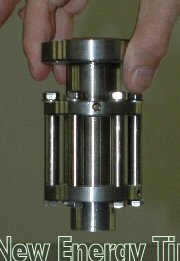

1992 Piantelli-Focardi Ni-H Cell
Photo: S.B. Krivit
The Piantelli-Focardi group wrote an outstanding chronology of the history of the related experiments on Page 2 of “Overview of H-Ni Systems: Old Experiments and New Setup.”[19]

However, the researchers’ seminal paper is “Anomalous Heat Production in Ni-H Systems,”[3] published in the Italian Physics Society’s Il Nuovo Cimento in 1994. They reported an experiment performed at the University of Siena beginning in October 1993 that produced “50 Watts of anomalous heat production in a hydrogen-loaded nickel rod” with a “mean power imbalance of 44 Watts for a period of 24 days, corresponding to 90 MJ.”

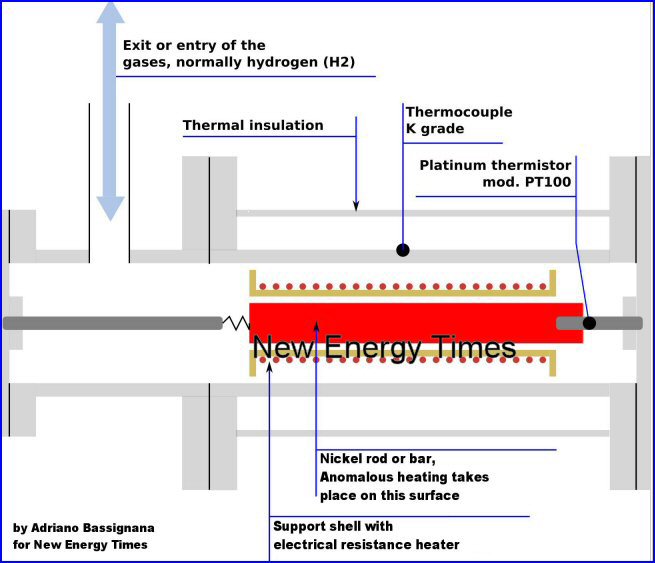
Dieter Britz, a longtime independent observer of LENR research, summarized the paper: “A Ni rod, 5 mm diameter and 90 mm long, was placed in a cylindrical chamber, surrounded by a Pt heater coil. The chamber could be evacuated or filled with gas (H2 or D2) at various pressures. The system was checked by replacing the Ni rod with a stainless steel one, and its temperature was noted as a function of heater power applied and gas pressure. With the Ni rod, the best temperature for H2 absorption was found to be 173C. Some Ni rods showed the expected temperature as a function of heater power in a H2 atmosphere, and others had elevated temperatures, showing that there was excess heat, on the order of 20-50 Watts, with heater power at 40-120 Watts.”


Conceptual diagram of Piantelli-Focardi-type Ni-H Cell


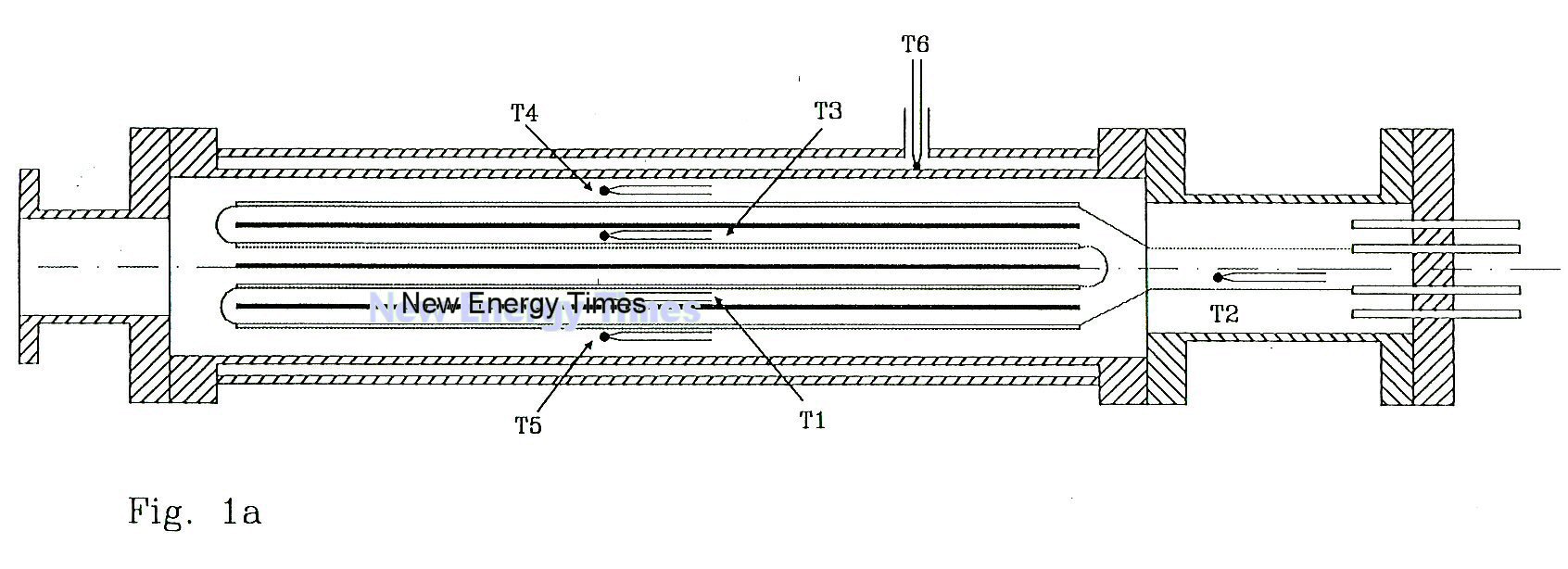
Engineering drawing of Piantelli-Focardi-type Ni-H Cell (Click for larger image)
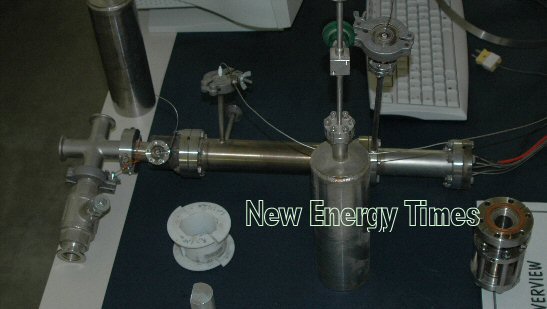

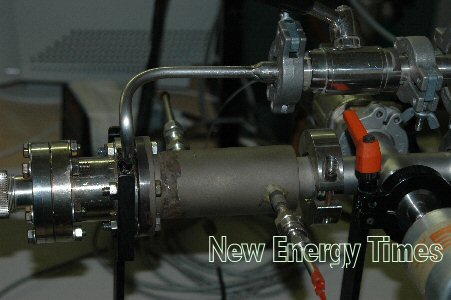
1992 Piantelli-Focardi Ni-H Cell (It’s the long horizontal object lying on table)
Photo: S.B. Krivit

In the authors’ own words, “the gas absorption was accompanied by a strong rise of the rod temperature standing high for such a long time [so as] to render the heat production involved incompatible with any classical theory.”

The authors also reported that they attempted but failed to detect neutrons and gamma rays above background during the process. This paper cites only one reference: the preliminary note [1] of Martin Fleischmann, B. Stanley Pons and Marvin Hawkins.

After the Piantelli-Focardi researchers’ paper published, they held a press conference which was covered by Foresta Martin Franco of Corriere Della Sera in Milano, Italy.[4] The news report, and the press conference, convened by local politician Luigi Berlinguer, occurred on Feb. 19, 1994.

“The research,” the paper quoted Berlinguer as saying, “even though underfunded, can produce great results.” (“La ricerca, anche se sostenuta da mezzi poveri, può produrre grandi risultati.”)

Failure to Replicate at CERN
The next publishing milestone is the report of the attempt by researchers at CERN, the European center for high energy physics research, to replicate the Piantelli-Focardi group’s work. The CERN group’s report published in December 1996 in Il Nuovo Cimento [9]. It is a peculiar report.

The authors state, “We have found the [Piantelli-Focardi group’s] results to be consistent with our observations; namely we measured higher temperatures for the same input power when hydrogen is absorbed during a heating cycle. Nevertheless this temperature rise does not appear to correspond to an increase in heat production. We have added a temperature sensor to the container of the experiment.

“The temperature of the container follows the same temperature with input power curve irrespective of whether there is an anomalous absorption of hydrogen or not; therefore we have no evidence that this temperature increase corresponds to another source of heat. In conclusion, we have observed all the effects discovered by Focardi et al., but our results imply that there is no production of power associated with the absorption of hydrogen by nickel.”

It is most peculiar. They see heat, as did the Piantelli-Focardi group, but their interpretation is that it is not anomalous.

Another interesting thing about the CERN paper is that, despite the fact that the Piantelli-Focardi researchers make no claim for fusion in their paper, aside from the journal’s classification of the paper, the CERN authors critique this nonexistent claim – in other words, introducing a “straw man” argument. The only related statement the Piantelli-Focardi group makes is that “work is now in progress to verify as a possible candidate for the heat generation the reaction (p, D), where D is that naturally contained in hydrogen.” No mention of fusion, no mention of any reaction chain.

However, the CERN authors lead off their article making a theoretical argument against the Piantelli-Focardi group’s paper, implying that the Piantelli-Focardi group is making a claim of fusion. The CERN group introduce the reaction pD > 3H3 + gamma and present the improbabilities of such as a critique to the Piantelli-Focardi group. The Piantelli-Focardi researchers also say nothing in their paper about helium, and what they say about gamma is that they failed to detect any above background.

The CERN group concludes its first section discouragingly: “Thus, the reaction pD appears to be an unlikely candidate.”

The CERN paper’s opening argument was disingenuous for the reason described above, as well as because the authors’ attempt to use known theory to discredit the Piantelli-Focardi group’s empirical work was unscientific.

The CERN authors admit that they lack information from the Piantelli-Focardi group’s paper. Perhaps these were essential details responsible for the failure to replicate.

They state that the Piantelli-Focardi researchers “do not specify exactly what they consider a loading cycle” – that is, CERN states, “On some occasions we observed absorption of hydrogen: The gas pressure started to decrease while the temperature of both the coil and the rod increased.”

Piantelli understands this process of loading clearly. He said, at least in the years following, that the process of loading the hydrogen properly into the nickel to attain a steady pressure is a prerequisite to seeing anomalous heat.

Later in the CERN authors’ paper, they state, “We found that this phenomenon of absorption of hydrogen was not reproducible.”

This is important. Without the proper hydrogen absorption into the nickel, excess heat almost certainly will not occur. This is exactly what Michael McKubre, director of energy research at SRI International, has said for many years about the D/Pd system: If you do not achieve the minimum loading threshold, you almost never see excess heat. But the language in the CERN statement has a political edge: The statement does not say the phenomenon was irreproducible in the group’s work; it says that the phenomenon was irreproducible, period.

Finally, the CERN authors write that they tried a 50/50 mix of hydrogen and deuterium and that, as well, failed to produce the claimed result. As Piantelli explains in “Deuterium and Palladium Not Required,” he now knows very well that the introduction of deuterium will kill any chances of a positive result.

This work, although it entails a significant effort, does not represent an effective critique of the Piantelli-Focardi group’s work, though it does provide useful information about an experiment that fails to replicate that work.

Piantelli-Focardi Group Responds to CERN
In November 1998, the Piantelli-Focardi group published “Large Excess Heat Production in Ni-H Systems,”[14] again in Il Nuovo Cimento. The paper directly responds to the most significant criticism of the 1996 CERN paper.

In the Piantelli-Focardi authors’ introduction to their new paper, they state that they modified the cell they reported in 1994 [3] with “an improvement which allows the measurement and the monitoring of the external surface temperature.”

“With this new set-up,” the Piantelli-Focardi group writes, “the external temperature increase, together with the internal one, have been utilized to characterize the excited state of the Ni sample. The existence of an exothermic effect, whose heat yield is well above that of any known chemical reaction, has been unambiguously confirmed by evaluating the thermal flux coming from the cells.”

The paper clarifies the term “excited state” as the phase in which the experiment was producing anomalous heat.

Britz wrote the follow summary of the 1998 Piantelli-Focardi group’s paper: “In addition to a cell used by this team earlier, consisting of a tubular vacuum chamber with a heating mantle around a Ni rod and a single temperature probe on the outside and the inside of the mantle, a new cell has now been designed with multiple probes.

“Hydrogen gas was admitted to the chambers, which were heated, and temperatures measured. Transient lowering of the input power produced, upon restoring the power, temperatures higher than before the transients. This showed the presence of nuclear phenomena, and calibrations performed calculated roughly 20 Watts of excess power generated by the hydrided Ni rods. The effect, once started, lasted for 278 days, the duration of the experiment.”

2007 Piantelli-Focardi Ni-H Cell
Photo: S.B. Krivit

In their 1994 paper, the Piantelli-Focardi researchers report that they saw no neutrons or gamma rays, though they later reported morphological changes in the nickel rods.[20] In the introduction of their 1998 paper, they report “very clear evidence of neutrons and gamma rays,” though these had been reported several years earlier, in 1995 [7], 1996 [8] and 1997 [13] in conference proceedings.

The next major paper from the Piantelli-Focardi researchers was published in September 1999 [16], again in Il Nuovo Cimento. One of their colleagues, Adriano Battaglia, had died, and they dedicated the paper to his memory.

“In this paper,” the authors write, “evidence is reported for neutron emission during energy production in Ni-H systems at about 700 Kelvin. Neutrons were detected directly by 3He counters and indirectly by gold activation.”

The paper goes into great detail about the arrangement and preparation of the three separate, independently powered neutron detectors and their careful efforts to isolate background cosmic-ray emissions. They report a temporal correlation of the neutron measurements along with the excess heat measurements.

“Two methods were used for neutron detection: direct counting by means of neutron detectors,” the authors write, “and counting of gamma rays emitted by neutron activated gold.”

The authors report a brief period of significant neutron activity above background that occurred during a heat excursion so strong that they had to drop the input power to the system several times in order to keep the system stable.

“Several input power reductions were needed to keep the
working point temperature as constant as possible.”

“Such large deviations from the mean value,” the authors write, “occurred during a brief period for which the power emitted from the cell ‘A’ had a spontaneous increase (on the order of 10 Watts), and several input power reductions were needed to keep the working point temperature as constant as possible.”

The authors explained the logic behind their secondary neutron detection approach.

“A few elements,” the authors write, “as is well-known, have a high thermal cross-section for neutron capture. Among these, gold also has the characteristic of having some resonance peaks at energies higher than the thermal one. 197Au transmutes into 198Au by the reaction 197Au(n, gamma) 198Au. The latter decays with a 2.7-day half-life according to the process

in the 198Hg (411.8) level with a 99 percent branching ratio. The 198Hg decays to the ground state by emission of a 411.8 keV gamma-ray.”

The evidence for their hoped-for gamma ray peak is shown below.

“Gamma-ray spectra in the 350-500 keV region obtained with a germanium detector for: (a) gold sheet after the activation for 12 days on cell A; (b) gold sheet after the same exposition time to cosmic rays 10 m away from the cell; (c) gold sheet before the activation on the cell; (d) laboratory background.” [16, 19]

The paper reports a few other inexplicable anomalies and concludes that the data fall outside of current knowledge of nuclear physics.

University of Pavia: Failure to Replicate or Positive Confirmation?
One inexplicable part of the Piantelli-Focardi group’s history is the statement made by Adalberto Piazzoli of the physics department at the University of Pavia. Piazzoli also is vice president of CICAP (Italian Committee for the Control of the Affirmations on the Paranormale). He refers to an alleged failed replication attempt by Luigi Nosenzo (University of Pavia) and Luigi Cattaneo of Consiglio Nazionale Ricerche (National Research Council.)

“Unfortunately, we have not been able to reproduce some of the results of the cited colleagues,” Piazzoli writes, “but we know that, in the study of unknown phenomena, even though existing, the confirmations and refutation do not have the same verification value. Our esteem for our colleagues of Florence and Siena remains naturally unchanged.”

Piazzoli’s comments appear in the March/April 2008 issue of Scienza & Paranormale, and although he shows honor and respect for the researchers, there are two discrepancies. This first is in his language, which translates to “refutation.” He writes that confirmations and refutations do not have the same verification value.

Yes, there is some truth to this, but he seems to have used the wrong term. The term should be “failure to replicate,” not refutation.

The second anomaly is the display in Piantellil’s laboratory of the poster and data which discuss a nickel-hydrogen gas replication experiment performed at the University of Pavia. One of the graphs representing this data is in the “Deuterium and Palladium Not Required” article.

Other Evidence
As mentioned earlier, the paper “Overview of H-Ni Systems: Old Experiments and New Setup” is an excellent source of information and perhaps an ideal starting point to learn more about this group’s work. The paper also estimates the neutron flux, noted above, at a rate of 6,000 neutrons per second and shows the expected Compton peak. The Compton peak is famous among “cold fusion” skeptics for its absence from gamma-ray data in the March 1989 Fleischmann-Pons paper submitted to but rejected by Nature.

The Piantelli-Focardi group’s paper “Surface Analysis of Hydrogen Loaded Nickel Alloys” [20] reports SEM analysis which provides evidence for low-energy nuclear transmutation, and the group’s paper “Evidence of Electromagnetic Radiation from Ni-H Systems” [21] presents evidence for photon emission. Many other Piantelli-Focardi group papers from conference proceedings are available; some of them are listed in the reference section.[10, 12, 17,18] Piantelli also provided New Energy Times with an set of miscellaneous graphs and images. They are available here.

An interesting point in the related work is the common absence of excess heat when tritium is detected. [2,5,6,11] This same relationship with the D/Pd systems has been observed and reported by several researchers, specifically by McKubre in several conferences last year. It also will be published in a report from his group in the forthcoming American Chemical Society book “Low-Energy Nuclear Reactions Sourcebook,” edited by Jan Marwan and Steven B. Krivit. [22]

A related paper by Giuliano Mengoli et al., “Anomalous Heat Effects Correlated With Electrochemical Hydriding of Nickel,” was published in Il Nuovo Cimento in March 1998.[15]

Britz wrote the following comments to summarize the paper: “This is a confirmation of [LENR] in the Ni/light water system, but the Mills theory is rejected (a good brief history is provided). The authors note that this system shows better reproducibility than Fleischmann-Pons-type heavy water systems, but the Mills’ theory is refuted by experiments of Piantelli. …

“Both isothermal and non-isothermal calorimetry was used, at three working bath temperatures: 50C, 80C and 99C. Significant (up to 20-30 sigma) excess heat was found, increasing with temperature; but no blank controls were possible. Some (a few) runs failed, producing no excess heat in these; the cathodes were preoxidised, or organic impurities had been in these cells. Thus, surface treatment is important. There was a marked aftereffect – that is, excess heat after current cut-off.”

Mengoli et al. wrote, “We believe that the findings of both Mills and Piantelli have a common origin: In other words, the thermal effects observed in either electrolytic or dry environments start from the same physical-chemical state of the system. Although this is far from being an explanation of the phenomenon, elucidation of the physical-chemical conditions suitable for its induction is the first step in understanding it.”

References

  1. Fleischmann, M., et al., “Electrochemically Induced Nuclear Fusion of Deuterium,” Journal of Electroanalytical Chemistry, Vol. 261, Issue 2, Part 1, p. 301-308 (April 10, 1989) and errata in Vol. 263, p. 187-188, (1989)
  2. Srinivasan, M., et al., “Tritium and Excess Heat Generation During Electrolysis of Aqueous Solutions of Alkali Salts With Nickel Cathode,” Proceedings of the Third International Conference on Cold Fusion, Nagoya, Japan, Universal Academy Press Inc., Tokyo, Japan, (1992) [Ed: Srinivasan states that he has since withdrawn the excess heat part of the results because he found later that recombination does take place within an open cell, which could account for the excess heat.]
  3. Focardi S., Habel R., and Piantelli F., “Anomalous Heat Production in Ni-H Systems,” Nuovo Cimento, Vol. 107A, p. 163-167, (1994)
  4. Franco, Foresta Martin, “Siena scopre l’ energia pulita Fusione fredda all’ italiana?,” Corriere Della Sera,  (Feb. 19, 1994)
  5. Notoya, R. et al., “Tritium Generation and Large Excess Heat Evolution by Electrolysis in Light and Heavy Water-Potassium Carbonate Solutions With Nickel Electrodes,” Fusion Technology, Vol. 26, p. 179, (Sept. 1994)
  6. Sankaranarayanan, T.K., Srinivasan, M., Bajpai, M.B., and Gupta, D.S., “Evidence for Tritium Generation in Self-Heated Nickel Wires Subjected to Hydrogen Gas Absorption/Desorption Cycles,” Proceedings of Fifth International Conference on Cold Fusion, Monte-Carlo, Monaco: IMRA Europe, Sophia Antipolis Cedex, France, (1995)
  7. Focardi S., Gabbani V., Habel R., Montalbano V., Piantelli F. and Veronesi S., “Status of Cold Fusion in Italy,” Siena Workshop, Siena, 24-25 (March 1995)
  8. Focardi S., Gabbani V., Habel R., Montalbano V., Piantelli F. and Veronesi S., [paper name missing], Atti Accad. Fisiocritici, Serie XV, Tomo XV p.109-115, (1996)
  9. Focardi, S. Gabbani, V, Montalbano, V., Piantelli, F., Veronesi, S. “Evidence for Nuclear Reactions in Ni-H Systems I: Heat Excess Measurements,” (no publication details known.)
  10. Cerron-Zeballos, E., Crotty, I., Hatzifotiadou, D., Lamas Valverde, J., Williams, M.C.S., and Zibichi, A., “Investigation of Anomalous Heat Production in Ni-H Systems,” Nuovo Cimento, Vol. 109A, p. 1645-1654, (1996)
  11. Focardi S., Gabbani, V., Montalbano, V., Piantelli, F., and Veronesi, S., “Analisi Superficiale Con Mocrosonda X Delle Barrette Metalliche Utilizzate Per La Produzione Anomala Di Energia Negli Esperimenti Di Siena, Atti Acc. Fisiocritici Siena, Serie 15, Tomo 15, p. 109-115, (1996)
  12. Sankaranarayanan, T.K., Srinivasan, M., Bajpai, M.B.,  and Gupta, D.S., “Investigation of Low-level Tritium Generation in Ni-H2O Electrolytic Cells,” Fusion Technology, Vol. 30, p. 349, (1996)
  13. Focardi, S., Gabbani, V., Montalbano, V., Piantelli, F. and Veronesi, S., “On the Ni-H System,” Asti Workshop in Hydrogen- /Deuterium-Loaded Metals, (27-30 November 1997)
  14. Focardi S., Gabbani V., Habel R., Montalbano V., Piantelli F. and Veronesi S., [paper name missing], Asti Workshop on Anomalies in Hydrogen/DeuteriumLoaded Metals, Asti, (27-30 November 1997)
  15. Focardi, S., Gabbani, V., Montalbano, V., Piantelli, F. and Veronesi, S., “Large Excess Heat Production in Ni-H Systems,” Nuovo Cimento, Vol. 111A, p. 1233-1242, (1998)
  16. Mengoli, G., Bernardini, M., Manducchi, C., and Zannoni, G., “Anomalous Heat Effects Correlated With Electrochemical Hydriding of Nickel,” Il Nuovo Cimento, Vol. 20 D, p. 331-352, (1998)
  17. Battaglia, A., Daddi, L., Focardi, S., Gabbani, V., Montalbano, V., Piantelli, F., Sona, P.G., and nesi, S., “Neutron Emission in Ni-H Systems,” Nuovo Cimento, Vol. 112 A p. 921-931, (Sept. 1999)
  18. Campari, E. G., Focardi, S., Gabbani, V., Montalbano, V., Piantelli, F., Porcu, E., Tosti E. and Veronesi, S., “Ni-H Systems,” Proceedings of the 8th Conference on Cold Fusion, p. 69-74, (2000)
  19. Focardi, S. and Piantelli, F., “Produzione Di Energia E Reazioni Nucleari In Sistemi Ni-H A 400 C,” XIX Congresso Nazionale UIT, 2004 (PPT)
  20. Campari, E., Focardi, S., Gabbani, V., Montalbano, V., Piantelli, F., and Veronesi, S., “Overview of H-Ni Systems: Old Experiments and New Setup,” 5th Asti Workshop on Anomalies in Hydrogen- / Deuterium-Loaded Metals, Asti, Italy, (2004)
  21. Campari, E.G., Focardi, S., Gabbani, V., Montalbano, V., Piantelli, F., and Veronesi, F., “Surface Analysis of Hydrogen-Loaded Nickel Alloys,” Proceedings of the Eleventh International Conference on Condensed Matter Nuclear Science, Marseille, France, (2004)
  22. Focardi, S., Gabbani, V., Montalbano, V., Piantelli, F. and Veronesi, S., Focardi, S., et al. “Evidence of Electromagnetic Radiation From Ni-H Systems,” Proceedings of the Eleventh International Conference on Condensed Matter Nuclear Science, Marseille, France, (2004)
  23. Marwan, Jan and Krivit, Steven B. eds., “American Chemical Society Symposium Series: Low-Energy Nuclear Reactions Sourcebook,” Oxford University Press, ISBN 978-0-8412-6966-8, (Fall 2008)


1994Focardi-AnomalousHeatNi-H-NuovoCimento

 

COLD FUSION: What is it and what does it mean to science and society?

This is an article by Edmund Storms. He obtained a Ph.D. in radiochemistry from Washington University (St. Louis) and is retired from the Los Alamos National Laboratory after thirty-four years of service. His work there involved basic research in the field of high temperature chemistry as applied to materials used in nuclear power and propulsion reactors, including studies of the “cold fusion” effect.
I thought it could be a good idea to let somone speak with such a reputation and to show the differences between the two main pathes of LENR. Namely the Pons-Fleischmann effect and the Rossi-Focardi e-cat based on the Piantelli Experiment.

Cold fusion is important because it promises to be a new source of pollution-free, inexhaustible energy.  In addition, it is important because it reveals the existence of a new way nuclei can interact that conventional scientific theory predicts is impossible.  What then is this phenomenon that suffers such promise and rejection?

Energy can be obtained from the nucleus in two different ways. On the one hand, a large nucleus can be broken into smaller pieces, such as is experienced by uranium in a conventional nuclear reactor and by the material in an atom bomb.  This is called fission. On the other hand, two very small nuclei can be joined together, such as occurs during fusion of deuterium and tritium in a Hot Fusion reactor and in a hydrogen bomb. This process, called fusion, also takes place in stars to produce much of the light we see.

The fission reaction is caused to happen by adding neutrons to the nucleus of uranium or plutonium to make it unstable. The unstable nucleus splits into two nearly equal pieces, thereby releasing more neutrons, which continue the process.  As every one now knows, this process produces considerable waste that is highly radioactive. The uranium used as fuel also occurs in limited amounts in the earth’s crust.  As a result, this source of energy is not ideal, although widely used at the present time.

The normal hot fusion reaction requires two deuterium or tritium nuclei to be smashed together with great energy. This is accomplished by raising their temperature.  However, this temperature is so high that the reactants cannot be held in a solid container, but must be retained by a magnetic field. This process has proven to be very difficult to accomplish for a time sufficient to generate useable energy.  In spite of this difficulty, attempts have been under way for the last 40 years and with the expenditure of many billions of dollars. Success continues to be elusive while the effort continues.

Cold fusion, on the other hand, attempts to cause the same process, but by using solid materials as the container held at normal temperatures. The container consists of various metals, including palladium, with which the deuterium is reacted to form a chemical compound. While in this environment, the barrier between the deuterium nuclei is reduced so that two nuclei can fuse without having to be forced together.  Because the process causing this to happen is not well understood, the possibility is rejected by many conventional scientists. Difficulty in producing the process on command has intensified the rejection.  While this difficulty is real, it has not, as many skeptics have claimed, prevented the process from being reproduced hundreds of times in laboratories all over the world for the past 13 years.  As you will see by reading the reviews and papers in our Library, the process continues to be reproduced with increasing ease using a variety of methods and materials.

What is the nature of this process and why has it been so hard to understand? To answer this question, a person needs to understand the nature of the barrier that exists between all nuclei.  Because all nuclei have a positive charge in proportion to their atomic number, all nuclei repeal each other.  It is only the surrounding electrons that hold normal matter together, with the nuclei being at considerable distance from each other, at least on the scale of an atom. When attempts are made to push the nuclei closer, the required energy increases as the nuclei approach one another. However, when deuterium dissolves in a metal, it experiences several unique conditions. The surrounding metal atoms produce a regular array that is able to support waves of various kinds.  These waves can be based on vibration of the atoms (phonons), vibration of the electrons, standing waves of electromagnetic energy, or a wave resulting from conversion of the deuterium nuclei to a wave. In addition, the high density of electrons can neutralize some of the positive charge on the deuterium nuclei allowing a process called tunneling, i.e. allowing passage through the barrier rather than over it. The mechanism of this neutralization process is proposed to involve a novel coherent wave structure that can occur between electrons under certain conditions. All of these wave processes have been observed in the past under various conventional conditions, but applying them to the cold fusion phenomenon has been a subject of debate and general rejection.

While the debate based on wave action has been underway, people have proposed other mechanisms. These include the presence of neutrons within the lattice. Normally, neutrons are unstable outside of the nucleus, decomposing into a proton, an electron, and a neutrino. Presumably, this reaction can be reversed so that neutrons might be created in a lattice containing many free electrons and protons. Having no charge, the neutron could then interact with various atoms in the lattice to produce energy. These neutrons might also be hidden in the lattice by being attached to other nuclei in a stabilized form, to be released when conditions were right. Several particles normally not detected in nature also have been proposed to trigger fusion and other nuclear reactions.

While search for a suitable mechanism has been underway, an understanding of the environment that triggers the mechanism has been sought, the so-called nuclear-active-environment. Initially, this environment was thought to exist in the bulk of the palladium cathode used in the Pons-Fleischmann method to produce cold fusion. It is now agreed that the nuclear reactions only occur in the surface region. Recent arguments suggest that this surface layer does not even require palladium for it to be nuclear-active. Nuclear reactions have now been produced in a variety of materials using many methods. The only common feature found in all of these methods is the presence of nano-sized particles of material on the active surface. If this observation is correct, four conditions seem required to produce the nuclear reactions. First, the particle must have a critical small size; second, it must contain a critical concentration of deuterium or hydrogen; third, it must be constructed of certain atoms; and fourth, it must be exposed to a source of energy. This energy can take the form of a sufficiently high temperature, a significant high flux of hydrogen through the particle, application of energetic electrons or charged particles, or application of laser light of the proper frequency. Until, the importance of these factors is understood, the effect will continue to be difficult to replicate.

At least 10 ways have been demonstrated to produce anomalous heat and/or anomalous elemental synthesis. A few of these methods will be described here. For course, not all of the claims are worthy of belief nor are they accepted by many people. Nevertheless, the claims will be described without qualifications in order to provide the reader with the latest understanding.

The most studied method involves the use of an electrolytic cell containing a LiOD electrolyte and a palladium cathode. Current passing through such a cell generates D+ ions at the cathode, with a very high effective pressure. These ions enter the palladium and, if all conditions are correct, join in a fusion reaction that produces He-4. Initially palladium wire and plate were used, but these were found to form microcracks, which allowed the required high concentration of deuterium to escape. Later work shows that the actual nuclear reaction occurs on the surface within a very thin layer of deposited impurities. Therefore, control of this impurity layer is very important, but rather difficult. The use of palladium is also not important because gold and platinum appear to be better metals on which to deposit the impurity layer. This method is found, on rare occasions, to generate tritium within the electrolyte and transmutation products on the cathode surface. Different nuclear reactions are seen when light water (H2O) is used instead of D2O, although the amount of anomalous energy is less when H2O is used. These observations have been duplicated hundreds of times in dozens of laboratories, as described in several of the review articles available on this website.

Application of deuterium gas to finely divided palladium, and perhaps other metals, has been found to generate anomalous energy along with helium-4. Both palladium-black as well as palladium deposited as nanocrystals on carbon have shown similar anomalous behavior. In both cases the material must be suitably purified. Palladium deposited on carbon can and must be heated to above 200/260°C for the effect to be seen. When deuterium is caused to diffuse through a palladium membrane on which is deposited a thin layer of various compounds, isotopes that were not previously present are generated with isotopic ratios unlike those occurring naturally.

A plasma discharge under H2O or D2O between various materials generates many elements that were not previously present. When the electrodes are carbon and the plasma is formed in H2O, the main anomalous element is iron. This experiment is relatively easy to duplicate.

Several complex oxides, including several superconductors, can dissolve D2 when heated. When a potential is applied across a sheet of such material, the D+ ions are caused to move and anomalous heat is generated.

If deuterium ions, having a modest energy, are caused to bombard various metals, tritium as well as other elements not previously present are generated. These ions can be generated in a pulsed plasma or as a beam.

When water, either light or heavy, is subjected to intense acoustic waves, collapse of the generated bubbles on the surrounding solid walls can generate nuclear reactions. This process is different from the fusion reaction claimed to occur within a bubble just before it disappears within the liquid because neutrons are not produced in the former case, but are produced in the latter case. This method has been applied to various metals in heavy water using an acoustic transducer and in light water using a rotating vane which generates similar acoustic waves.

A major problem in deciding which model might be correct is the absence of any direct information about the nature of the nuclear-active-environment. At this time, two important features seem to be important, the size of the nanodomain in which the reactions occur and the presence of a deuterium flux through this domain. The domain can apparently be made of any material in which hydrogen or deuterium can dissolve. Until the nature of the nuclear-active-state (NAS) is known, no theory will properly explain the effect and replication of the claims will remain difficult.

When fusion is initiated using conventional methods, significant tritium and neutrons are produced. In addition, when other elements are generated, they tend to be radioactive. This is in direct contrast to the experience using low energy methods. These products are almost completely absent and, instead, helium-4 is produced. When radiation is detected, it has a very low energy. This contrasting behavior, as well as the amount of anomalous energy, has made the claims hard to explain using conventional models. This difficulty has been amplified by a failure of many skeptics to recognize the contrasting effect of the environment, a plasma being used in the older studies and a solid lattice of periodic atoms being present as the new environment.

Over 500 models and their variations have been proposed, some of which are very novel and some are variations on conventional ideas. Most models attempt to explain the nuclear reaction once the required environment has been created, without addressing what that unique environment might be like. These models involve conversion of a proton (deuteron) to a neutron (dineutron), creation of an electron structure that is able to neutralize the barrier, conversion of deuterium to a wave which interacts without charge, and the presence of otherwise overlooked neutrons and/or novel particles. Many of the models will have to be abandoned or seriously modified once the nature of the nuclear active environment is understood.

Clean Energy

Researchers at NASA Ames are conducting cutting-edge research in the development of clean energy technologies for NASA mission needs in the Exploration Systems Mission Directorate and the Science Mission Directorate. Our renewable energy focus is on advancing biofuels, solar, and wind technologies that also help reduce our nation’s dependence on petroleum-based fuels. By advancing clean energy technologies, NASA Ames hopes to help our nation reduce its generation of greenhouse gases and create a sustainable future here on Earth. (from nasa.gov)


Biofuels

Biofuels may provide a means to generate and store energy for NASA’s long-term human habitation and exploration missions. NASA Ames is conducting research on biofuels from both algae and waste biomass. Algae can be grown as a crop that is very high in oil content; waste biomass is envisioned as a elegant means of extracting energy from waste materials. Biofuels also benefit us here on Earth as a transportation fuel that reduces our dependence on foreign oil and mitigates the generation of greenhouse gas emissions.

The Algal Biofuels Team is centered around expertise in algal strain selection, growth, characterization, and monitoring, including photobioreactor research and development, microsatellites with algae in space, algae from extreme environments, and algae communities research.

The Cellulosic Biofuels Team is focused on bioengineering techniques that can improve the efficiency of digestion enzymes, investigating lipid extraction and analyses, and rosettazymes research to improve the cellulose-to-glucose-to-fuels process. The team issued a press release on July 31, 2009 describing their current research.

The Systems Engineering group develops and analyzes requirements for complex systems with unique capabilities to technically integrate component processes into a single system and assess potential sustainability and ecosystem impacts.

Solar energy is the primary source of power for today’s NASA missions. New solar technologies can improve space-based energy systems for human and robotic spacecraft missions. NASA solar technologies demand that deployed solar energy systems be as efficient and as lightweight as possible. Researchers at NASA Ames are pushing the limits of solar energy efficiency and weight by creating new materials that enhance solar energy system performance. Our technologies for space-based applications also provide Earth-based benefits, helping to drive down the cost of solar energy with more efficient systems.

Wind Energy Aeronautics research, including the aerodynamics of air flow over turbines, is one of the signature areas of research for NASA Ames. NASA Ames maintains several different wind tunnels of varying sizes used to predict the performance of new prototype designs of rotocraft and other equipment where aerodynamics is a critical component. With deep skills in modeling and design, our researchers can apply their expertise and facilities to wind power applications to create more efficient wind power systems.

  • Wind Tunnels
  • Rotorcraft Acoustics/Aeroacoustics
  • Computational Fluid Dynamics
  • Fluid Mechanics